Easton Hospital
The Good Nurse: A True Story of Medicine, Madness, and MurderEaston Hospital, in Easton, Pennsylvania, is the setting of one of the earliest documented episodes linking Charles Cullen to a patient’s death by unprescribed medication. In December 1998, while working night shifts at the hospital, Cullen cared for Ottomar Schramm, whose unexplained collapse and death followed exposure to digoxin. The death was ruled accidental, but the hospital’s records and its reliance on outside staffing agencies later became part of a wider effort to reconstruct Cullen’s employment and investigate the circumstances surrounding Schramm’s death.
Setting and Cullen’s arrival
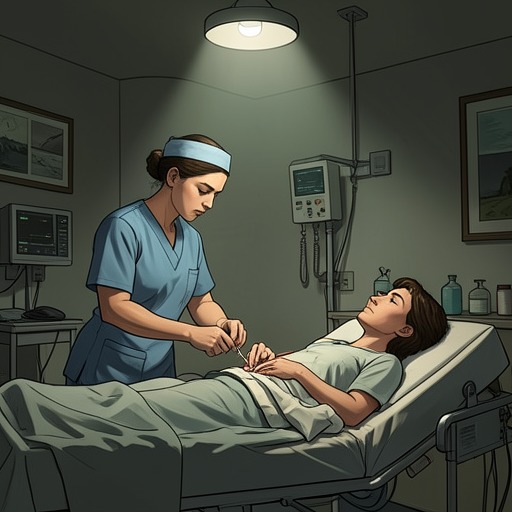
During the week between Christmas and New Year’s Day, Cullen began work at Easton Hospital, only a few miles from Liberty Nursing and Rehabilitation Center, where he had recently been employed. He was working through a staffing agency and was willing to take whatever shifts were available; much of the work was overnight in the intensive care unit. The move followed his dismissal from Liberty, where he had been reassigned from the intensive care unit to the psychiatric wing and then fired for failing to follow drug protocol.
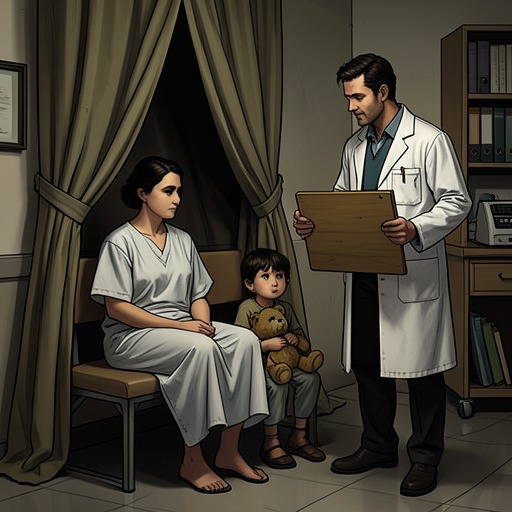
Schramm was admitted after aspirating food into his lungs at the nursing home where he lived. His daughter, Kristina Toth, saw Cullen with a syringe and initially did not know whether he was a nurse. Cullen told her he needed to take her father for tests and said the syringe was for use if Schramm’s heart stopped. Toth did not believe her father had heart trouble, but accepted the explanation from the uniformed hospital worker responsible for his care.
Ottomar Schramm’s illness and death
On the morning after Cullen’s encounter with Schramm, Toth found her father looking markedly worse. His deterioration appeared unrelated to the stroke that had left him increasingly disabled: his heart rate fluctuated and his blood pressure fell. The next morning, however, she was told that he had stabilized and was improving. Toth and Schramm’s wife visited regularly, bringing cookies and a thermos of hot drink; Toth kissed her father on the head before leaving for work. The apparent recovery gave the family reason to hope that the crisis had passed.
That hope was interrupted when Schramm’s longtime physician, Dr. Robert Silberman, called Toth. Unauthorized blood tests had found digoxin in her father’s blood, although he had never been prescribed the drug. Silberman described the level as extraordinarily high. A follow-up test confirmed the result, and at 1:25 a.m. he called again to tell Toth that her father had died. He urged her to agree to an autopsy because of the digoxin.
When Toth’s family returned to the hospital the next morning, Cullen was still on the night shift. He led them to the room where Schramm’s body had been cleaned and disconnected from the machines, then returned to ask whether they planned to request an autopsy. When Toth said they were considering it, Cullen argued against the procedure, invoking Schramm’s living will and its rejection of extraordinary measures. Toth told him to leave. His intervention did not change her decision to consider an autopsy, and another nurse also asked the family about one soon afterward.
Investigation and the limits of the official finding
The discovery of a potentially lethal amount of unprescribed digoxin led to an internal investigation and the referral of Schramm’s autopsy to the county coroner. Zachary Lysek, the Northampton County coroner, conducted an eight-month inquiry, interviewing dozens of people involved in Schramm’s care at both the nursing home and Easton Hospital. He knew from Toth that a male nurse had been present, but at that point he did not know the nurse’s identity.
The forensic pathologist found that Schramm died of pneumonia, with digoxin overdose contributing to his death. The official manner of death was recorded as accidental. Lysek remained suspicious, but he had no evidence that would allow him to take the case further. The distinction between a documented drug exposure and an unproven cause of that exposure left the investigation with an alarming finding but no established perpetrator.
Three years later, an unnamed source told Lysek that the mystery nurse Toth had described was Charles Cullen and suggested that he might have been involved. Lysek then contacted the Pennsylvania State Police. The lead eventually surfaced again in the investigation of Cullen: investigators learned that digoxin had been found in the blood of a patient who died at Easton Hospital six years earlier, when Cullen had worked there. The earlier state police investigation had been abandoned, and the police had no further information on Cullen from that file. The connection was therefore both a major investigative lead and an unresolved case history, not a retrospective proof of what had happened to Schramm.
Staffing records and Cullen’s later employment
Easton Hospital’s reliance on staffing agencies complicated efforts to establish where Cullen had worked. In one account, he had been employed through Health Force, an agency Easton used for staffing. In another, the hospital’s records were explained through Health Med One, a personnel agency based in Harrisburg, Pennsylvania. When Lysek later asked Easton for Cullen’s employment records, an administrator reported that the hospital had no record of employing anyone by that name. That statement could be technically accurate under the hospital’s direct employee records while still obscuring the fact that Cullen had worked there through an agency.
The discrepancy exposed a practical problem for investigators: a search limited to a hospital’s own payroll or personnel records could omit clinicians who had treated a patient while employed by an outside service. Lysek’s experience at Easton made clear that tracing a potential victim’s medical staff required asking not only whom the hospital had directly employed, but also which agencies had supplied workers and who had been assigned to particular shifts.
Easton’s later decisions concerning Cullen also entered the record. Cullen told Amy Loughren that Easton would not rehire him after his departure from Saint Luke’s Hospital, and he suspected Saint Luke’s had warned the hospital against hiring him. Separately, Easton’s assistant chief executive told Pennsylvania state troopers that the hospital’s nursing recruiter had been contacted by attorney Paul Laughlin in August 2002. Laughlin said he could not explain why, but advised Easton not to hire Cullen. The account supports the existence of a warning, while Cullen’s suspicion about its source remains his own interpretation.
Easton Hospital’s significance thus extends beyond the short period Cullen worked there. Schramm’s death produced a formal finding of accidental death despite a confirmed digoxin overdose, while the delayed identification of Cullen and the fragmented employment trail show how an unresolved hospital incident could disappear into separate investigations and agency records. The Easton episode became a crucial lead in the later effort to understand Cullen’s history, but the available evidence leaves the precise circumstances of Schramm’s poisoning unproven.